TL;DR: Amazon A+ Content (formerly EBC) is a powerful tool for Brand Registry sellers to replace text-only descriptions with rich visuals, driving higher conversion rates and reducing returns through immersive storytelling.
Key Takeaways
- A+ Content can increase sales by 5% to 20% by enhancing trust and visual clarity.
- Amazon Brand Registry is a mandatory prerequisite for accessing A+ Content features.
- Strategic use of the Comparison Table module is the most effective way to cross-sell and reduce customer bounce rates.
Table of Contents
Note on marketplaces: This guide is specifically optimized for the US market, focusing on consumer psychology and technical standards for Amazon.com.
What is Amazon A+ Content (EBC)?
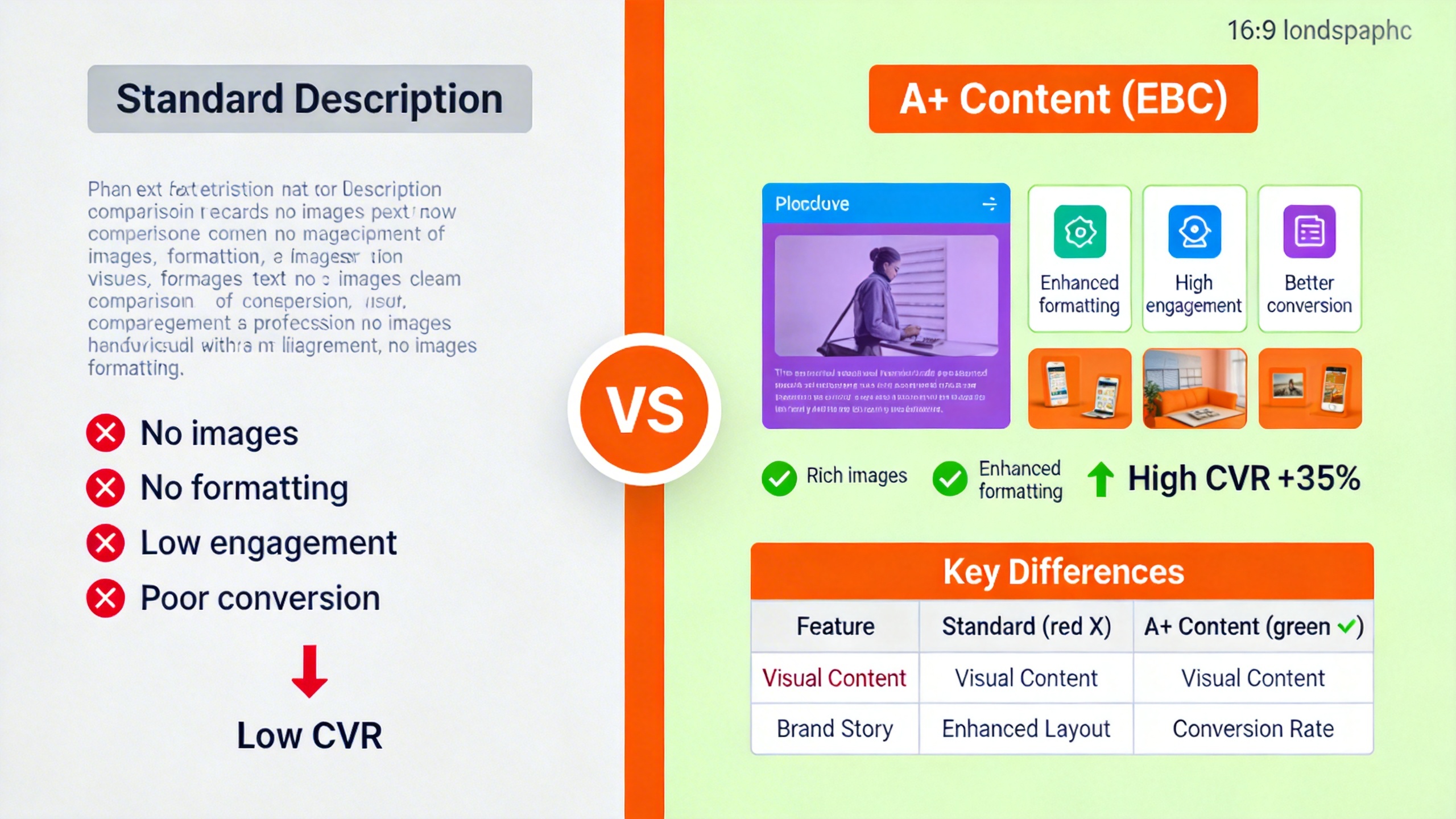
Amazon A+ Content, formerly known as Enhanced Brand Content (EBC), is a feature that allows brand owners to create visually rich product descriptions on their Amazon listings. Unlike the standard text-only product description, A+ Content allows for high-definition images, comparison tables, bulleted feature lists, and custom layouts. This is a fundamental pillar of Amazon SEO and Listing Optimization, as it helps retain customer attention and provides the information necessary to convert a browser into a buyer.
Eligibility: Amazon Brand Registry and Beyond
To access A+ Content, sellers must be enrolled in the Amazon Brand Registry. This program is designed to help brands protect their intellectual property and gain access to advanced marketing tools. Once registered, professional sellers and vendors can apply A+ Content to any ASIN within their approved brand catalog. In the US market, having Brand Registry is no longer just an advantage; it is a necessity for competing against established private labels and national brands.
Conversion Rate Optimization (CRO) with A+ Content
The primary goal of A+ Content is Conversion Rate Optimization (CRO). By addressing common customer questions and objections through visuals, you reduce the "friction" of the buying process. For instance, if you sell a complex electronic device, using a module that breaks down technical specs with icons can be more effective than a wall of text. Sellers often see a significant decrease in negative reviews and returns because A+ Content sets more accurate expectations for the product.
Technical Image Specs and Module Requirements
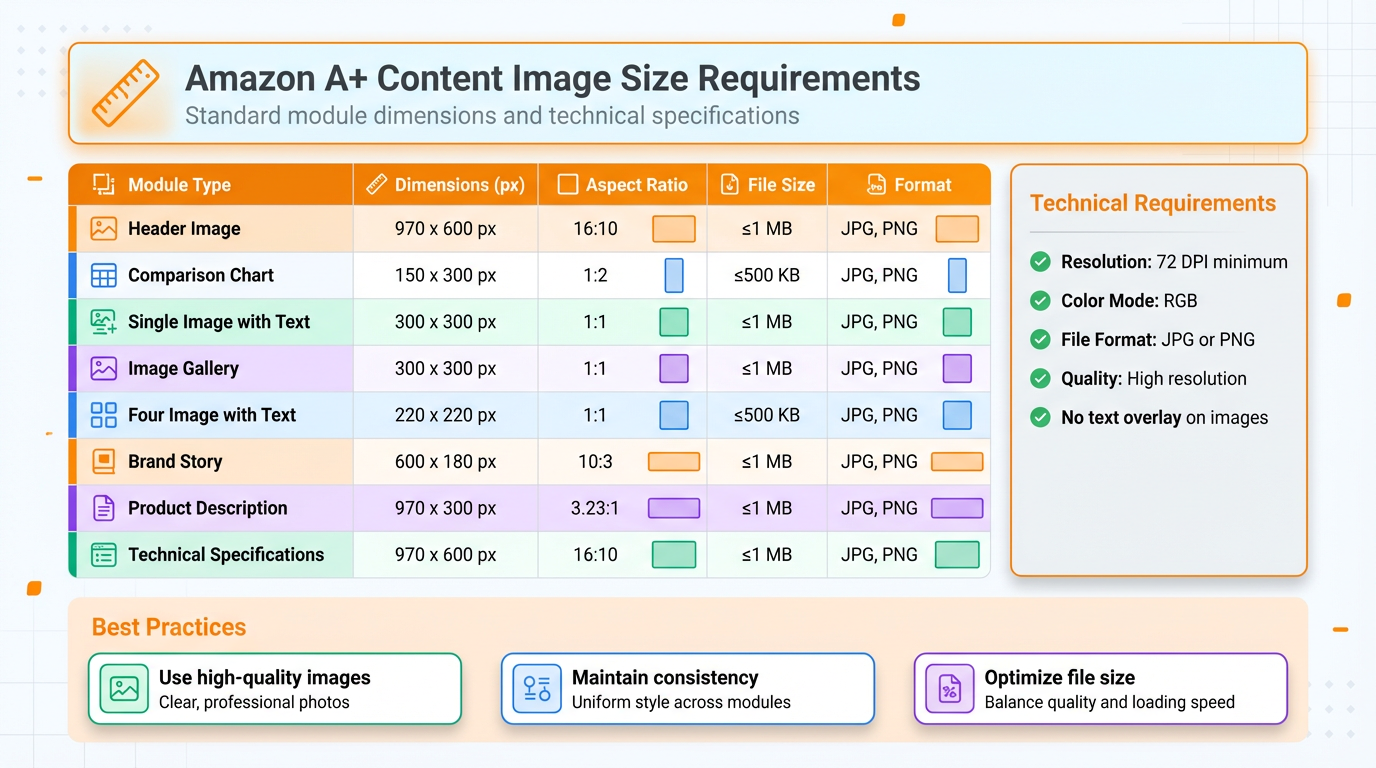
Meeting Amazon's technical requirements is critical to ensure your content is approved quickly and looks professional. Standard A+ Content typically uses images with a width of 970 pixels. However, for the modern mobile-first shopper, it is essential to design with mobile responsiveness in mind. Images should be high-resolution (300 DPI), and text within images must be legible on smaller screens. Using the "Premium A+ Content" tier, which is often granted to brands that have used standard A+ on at least 15 ASINs with high approval rates, allows for even larger images (1464px) and interactive elements like video and hover-over hotspots.
Cross-selling and Brand Catalog Strategy
One of the most underutilized features of A+ Content is the Standard Comparison Table. This module allows you to showcase other products in your brand's catalog directly on your competitor-facing product page. This serves two purposes: first, it keeps the customer within your brand ecosystem even if the current product isn't the perfect fit; second, it provides an easy way to up-sell to higher-priced models or cross-sell complementary accessories. For a deeper dive into creating these layouts, check out our guide on how to create Amazon A+ Content.
Design Best Practices for the US Market
When designing for US consumers, emphasize benefits over features. Instead of just stating a material is "waterproof," show an image of the product being used in a rainstorm with a caption like "Stay Dry in Any Weather." Use lifestyle photography that reflects the target demographic to build an emotional connection. Furthermore, ensure your brand story module highlights your company's values, as modern US shoppers are increasingly loyal to brands that align with their personal ethics and quality standards.
FAQ
How does Amazon A+ Content improve conversion rates for private label sellers?
A+ Content improves conversion rates by visually answering customer questions, reducing perceived risk, and building brand authority. It allows private label sellers to showcase product quality and brand story in a way that standard text descriptions cannot, often leading to a 5-20% boost in sales.
What are the specific image size requirements for Amazon A+ Content modules?
Standard A+ modules generally require a width of 970 pixels. Common sizes include: Full Header (970 x 600px), Standard 3-image module (300 x 300px), and Comparison Table images (150 x 300px). Premium A+ Content uses wider images, typically 1464 pixels wide.
Can I use Amazon A+ Content to cross-sell other products in my brand catalog?
Yes, the Comparison Table module is specifically designed for cross-selling. You can list up to 5-6 alternative or complementary products from your brand, allowing customers to compare features and click directly through to those other listings.
Next Steps
- Audit your current listings and identify high-traffic ASINs without A+ Content.
- Sign up for SellerSprite to analyze competitor A+ keywords and top-performing layouts.
- Draft your A+ layout using the comparison table and lifestyle modules to maximize CRO.
References
By SellerSprite Success Team
The SellerSprite Success Team consists of Amazon FBA experts and data analysts dedicated to helping sellers master the marketplace through data-driven SEO and conversion strategies.